








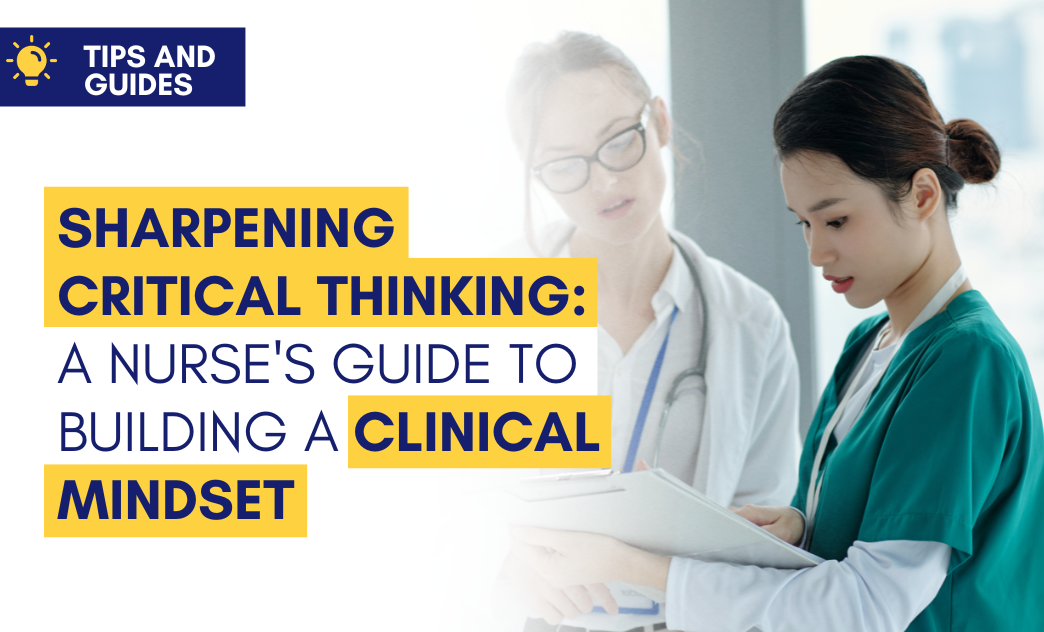
In the fast-paced world of healthcare, a patient’s condition can change at any moment, or a routine procedure can present an unforeseen complication. When the textbook answers fall short, what separates a good outcome from a bad one? The answer is critical thinking, the single most powerful tool an RN utilizes. This isn’t a soft skill, but a lifesaving competency that empowers nurses to confidently navigate complexity, enhance patient safety, and drive better clinical outcomes. This article explores practical strategies to sharpen this essential skill, preparing you for anything the clinical setting throws your way.
What Is Clinical Critical Thinking?
A critical-thinking nurse sees the whole patient, not just a list of symptoms. As the Journal of Nursing Advances in Clinical Sciencesdefines it, “Critical thinking is the purposeful and self-regulated judgment that develops during clinical reasoning and patient problem-solving.” Consider these two experiences shared by Avant’s Clinical Operations Managers. First, Jennifer Dye, BSN, BA, RNC-OB, C-EFM, from her time on a night shift handoff:
“I was taking care of a patient with bilateral femur fractures. The patient appeared drowsy and lethargic but was considered stable by the outgoing nurse. Despite the assumption that the symptoms were due to pain medication, I had a strong intuition that something was not right. Instead of dismissing the signs, I escalated my concerns through the proper chain of command. My advocacy led to a V/Q scan, which revealed not just one, but multiple pulmonary emboli.”
Whether you’re a seasoned nurse or a new graduate, these skills form the essential foundation of every nurse’s practice. As Priscilla Brumbaugh, BSN, RN, NE-BC, a Senior Clinical Operations Manager at Avant, shared from her early career, a similar scenario proved to be a life-saving moment:
Nursing Strategy
“I had a patient who had recently undergone a hip replacement. He was showing subtle signs of distress, like anxiety and shortness of breath. His oxygen saturation dropped from 100% to 93%. Despite normal vital signs, I had a strong sense that something was wrong. After speaking with the charge nurse, followed by persistent advocacy, the physician ordered a V/Q scan, which confirmed the patient had a pulmonary embolism. If it weren’t for my multiple escalation efforts, the patient would have had a fatal outcome.”
Nursing Skills
A task-oriented nurse might only note the “normal” vital signs. However, a critical-thinking nurse connects clues like anxiety, a drop in oxygen, and recent surgery. Both Jennifer and Priscilla trusted their instincts and escalated concerns, which is an example of clinical reasoning in action. This demonstrates key expert nursing skills outlined by the American Nurses Association (ANA):
- Clinical Judgment and Patient Safety: Critical thinking is the foundation of sound clinical judgment. It’s what allows you to prioritize a patient’s needs and adjust as their condition changes. In both stories, the nurses’ critical thinking led them to prioritize the patient’s subtle but concerning symptoms over the seemingly normal objective data. Their judgment that something was wrong and their subsequent actions ultimately prevented harm and saved their patients’ lives.
- Communication and Collaboration: Clinical reasoning involves clear communication and effective collaboration to ensure optimal patient outcomes. After assessing their patients, both nurses’ critical thinking led them to consult with their colleagues and persist in communicating their concerns to the physicians. Their ability to articulate their instincts and advocate for their patients was crucial in securing the necessary diagnostic tests.
- Problem-Solving Skills: Critical thinking is active problem-solving. It involves analyzing an issue, considering alternatives, and implementing solutions. Both nurses recognized subtle symptoms, questioned normal vitals, and advocated for diagnostic tests.

Overcoming Barriers to Critical Thinking in Nursing
Even experienced nurses face challenges that can hinder critical thinking. To effectively address these challenges, it’s important to first recognize common barriers. Here are some frequent obstacles and ways to overcome them:
Cultural Differences and Clinical Autonomy
In some countries, healthcare is structured around a stricter hierarchy, where nurses are expected to follow direct orders without questioning. The U.S. system, however, encourages nurses to act as a patient’s advocate and to use their clinical judgment to challenge orders or escalate concerns. This shift from a more passive role to an active one can be a significant cultural adjustment.
Time Pressure
In a fast-paced U.S. hospital, the immediate demands of a high patient-to-nurse ratio can overshadow the time needed for deeper analysis and reflection, especially when you’re still getting used to new protocols and technology.
Cognitive Overload
Constantly processing multiple patient needs, new admissions, and team communications in an unfamiliar language and system can lead to a state where there’s little mental bandwidth left for critical analysis.
Fear of Speaking Up
This can be a significant barrier, as the fear of being wrong or questioning a senior colleague or physician can be amplified by a fear of appearing incompetent or misunderstanding a situation due to a language or cultural barrier.
Lack of Mentorship
Without an experienced guide who understands the unique challenges of your transition, it can be challenging to navigate complex cases and receive the constructive feedback necessary to develop and refine critical-thinking skills.
Strategies to Sharpen your Critical Thinking
Critical thinking is a skill that can be developed through intentional practice and the right support. Avant Clinical Operations Manager, Paul Barkhau BSN, RN, CCRN, emphasizes the following habits that can help you overcome these barriers and strengthen this essential skill.
Reflective Practice
After each shift, take a moment to reflect on your decisions. What went well? What could have been handled differently? A simple tool like reflective journaling can help you formalize this process, building self-awareness and sharpening your judgment over time.
Ask Clinical Questions
Don’t hesitate to ask “why” when performing a task. Understanding the purpose behind each action helps you move from task-oriented to outcome-driven thinking. Paul explains, “It’s not just about completing the task, it’s about understanding the reason behind it and what you’re trying to accomplish.”
Leverage Mentorship and Collaboration
Paul emphasizes the importance of learning through mentorship. He encourages nurses to engage with charge nurses and senior staff, ask questions, and seek feedback. Reviewing charts with intention, checking parameters on orders, and aligning them with the overall clinical goal are key habits he instills in his HCPs.
Know Your Chain of Command
Critical thinking also means knowing when and how to escalate concerns. Paul advises nurses to be familiar with resources like the Rapid Response Team (RRT) and to act when something does not look right. “If something feels off, trust your instincts and escalate through the proper channels,” he says.

These strategies help transform your approach from task completion to making informed, patient-centered decisions, which are crucial for thriving in complex clinical settings.
How Avant Supports Critical Thinking in Nursing
Critical thinking requires deliberate practice, real-world experience, and guidance. That is why Avant Healthcare Professionals invests in your growth beyond just placement.
Simulation-Based Learning
Our simulation experiences are designed to help you build confidence and clinical skills. You will work through realistic, high-stakes scenarios that require rapid assessment and decision-making. This hands-on training develops the skills and muscle memory needed for real-world critical thinking.
Mentorship and Coaching
Our experienced clinical team provides one-on-one guidance to help you analyze complex cases and talk through your thought process. This personalized feedback is crucial for transitioning from a task-oriented mindset to a critical-thinking approach.
Case Study Discussions
Real-world patient cases are reviewed to help you connect symptoms, lab values, and patient history. These discussions sharpen your analytical skills and prepare you to make sound clinical judgments under pressure.
Through simulation, mentorship, and case-based learning, Avant provides nurses with the tools to think critically and act decisively, fostering long-term professional success.
Experience the Avant Difference
Whether you are an applicant in progress, a future arrival preparing for your move, or a prospective candidate exploring possibilities, take the next step. Let Avant support your growth every step of the way!
In-Process HCPs
Access your onboarding resources and reach out to your Nurse Educators now to begin building your clinical confidence.
Pre-Arrival HCPs
Join our virtual prep sessions and simulation workshops today. Sharpen your decision-making before starting your new role.
Potential Applicants
Take control of your career and see how Avant helps international nurses succeed in U.S. healthcare. Apply today to begin your journey.